

Ankit Kumar 2025-07-23
Factories are no longer just places filled with machines run by people - they’re becoming smart, data-driven environments thanks to the power of artificial intelligence in industrial automation. If you’ve ever wondered how the future of manufacturing looks, it’s all about smart technologies that work together, learn, adapt, and help businesses become faster, safer, and more profitable.
Let’s dive deep into how AI in Manufacturing is changing the global industrial landscape, how it actually works in real-world factories, what benefits it brings, and why manufacturers large and small should care about industrial AI solutions today. We’ll also discuss how trusted partners like Es Magico help businesses thrive with AI solutions for business.
Artificial intelligence in industrial automation is the use of computers and smart systems to handle jobs and make decisions in factories - things that used to need human thinking or manual effort. It’s more than robotic arms on assembly lines; it’s about giving machines the ability to:
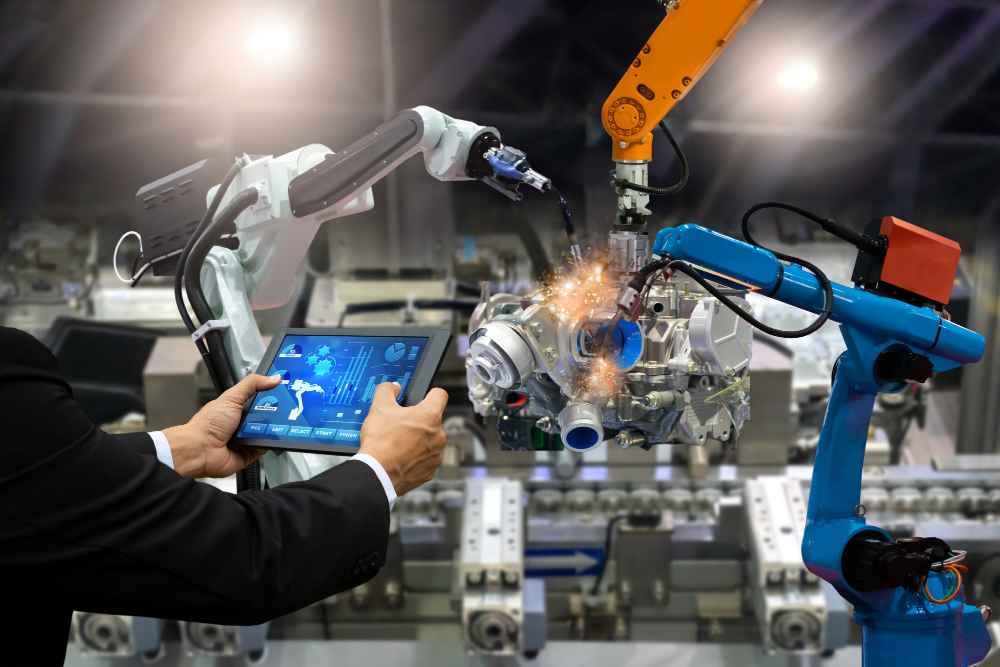
Imagine a production line where machines automatically adjust speeds, temperatures, or materials based on live feedback. Or picture a quality control system that never gets tired and spots even the tiniest defect instantly. These are just everyday examples of how AI in Manufacturing is making a huge impact.
Across the world, factories - from car plants to food packaging and electronics - are investing in AI in Manufacturing Industry to stay competitive in a rapidly changing market. Here’s why:
The truth is, manufacturers who don’t explore industrial AI solutions risk being left behind as tech-savvy competitors leap ahead.
Let’s break down some of the most popular uses for artificial intelligence in industrial automation:
Instead of fixing machines after they break, factories now use industrial AI solutions to predict when equipment will need attention. Sensors monitor performance and AI flags up “unusual” patterns - helping teams fix issues before costly failures happen. This reduces downtime and saves lots of money each year.
Example: An automotive plant uses AI to analyze vibration and temperature data from robots on the assembly line. If something starts to look wrong, the AI system sends an alert to maintenance staff, who prevent a breakdown.
It's impossible for humans to check every detail on every product, but AI-powered cameras can. These systems scan items as they roll off the production line, instantly catching defects or variances that would go unnoticed. They even get better over time by learning from mistakes, making AI in Manufacturing the gold standard for quality.
AI doesn’t just work on the factory floor - it powers smarter supply chains. AI analyses market trends, customer orders, and transport issues to forecast demand and keep just the right amount of stock. This stops over-ordering, under-stocking, and helps companies save on storage costs.
One overlooked benefit of artificial intelligence in industrial automation is smarter scheduling. AI can automatically create the best possible production schedules based on real-time demand, supply chain updates, and staffing changes. This means less idle time and faster fulfillment.
So, what makes this all possible? Industrial AI solutions combine several key technologies:
If you’re in the manufacturing industry, there’s never been a better time to consider the shift to smart automation. Here are some of the direct benefits companies are seeing from investing in AI in Manufacturing:
All of these add up to stronger brands and higher profits.
Looking forward to 2025 and beyond, experts expect the power of artificial intelligence in industrial automation to grow exponentially:
To stay ahead, businesses must treat AI in Manufacturing not as a luxury, but as a necessity.
Transitioning to smart manufacturing has its challenges:
Working with a partner like Es Magico ensures these challenges are addressed from day one, so you can focus on running your business.
At Es Magico, we deliver AIi solutions for business that are tailor-made for manufacturers who want to stay ahead of the curve. Our team takes the time to understand your unique needs, legacy equipment, and goals before recommending the best industrial AI solutions.
We leverage our expertise to:
Whether you’re looking to boost efficiency, create the ultimate smart factory, or simply see what AI can do for your business, Es Magico is your trusted guide.
If you want to begin your journey into AI in Manufacturing and need guidance, or if your business is ready for a full AI transformation, the path has never been clearer:
By taking these steps, you’ll unlock new levels of efficiency, reliability, and profit.
Smart manufacturing is here - and the leading factories are those that put artificial intelligence in industrial automation at their core. By adopting AI in Manufacturing, companies are outpacing competitors and building flexible, resilient businesses that thrive even in uncertain times.
From predictive maintenance to smart scheduling and quality control, industrial AI solutions let you do more, waste less, and delight your customers. Don’t wait for your competitors to pass you by. Partner with Es Magico for reliable, advanced AI solutions for business and step confidently into the future of manufacturing.

Share On:


Discover how AI is transforming the retail industry with 10 powerful use cases—from personalized shopping to intelligent inventory and dynamic pricing. Learn how businesses can harness AI for efficiency, customer engagement, and growth.
Discover how AI in manufacturing is revolutionizing quality control, predictive maintenance, and efficiency, driving Industry 4.0 growth.
Explore the top 10 AI solutions transforming the BFSI industry in 2025. Discover how AI is driving personalization, fraud prevention, risk management, and innovation in finance.