Multi-Agent Systems: When Coordination Earns Its Complexity
Multi-agent systems are exciting, and most tasks that get built as multi-agent systems would be better as something simpler, because the coordination that makes a system multi-agent adds complexity that most tasks do not need. A multi-agent system coordinates multiple agents, and that coordination brings the reliability, governance, and communication problems that a single agent or a simpler design does not have, so building a task as a multi-agent system takes on the coordination complexity, which is only worth it when the task genuinely needs the multiple agents. Multi-agent systems earn their complexity only when the task genuinely requires coordinating multiple agents, and most tasks that get built as multi-agent systems do not, taking on the coordination complexity for a benefit the task did not need. The coordination has to earn its complexity, and most tasks do not need it.
If you build multi-agent systems, the coordination complexity is a cost that most tasks do not need to pay, because most tasks built as multi-agent systems would be better as a single agent or a simpler design, taking on the coordination complexity for no benefit. The coordination earns its complexity only when the task genuinely requires multiple agents, and building a task as a multi-agent system when it does not need the multiple agents pays the coordination complexity for nothing. Understanding when coordination earns its complexity is what lets you build multi-agent systems only where they are needed rather than defaulting to them for tasks a simpler design would handle.
Why multi-agent is usually the wrong choice
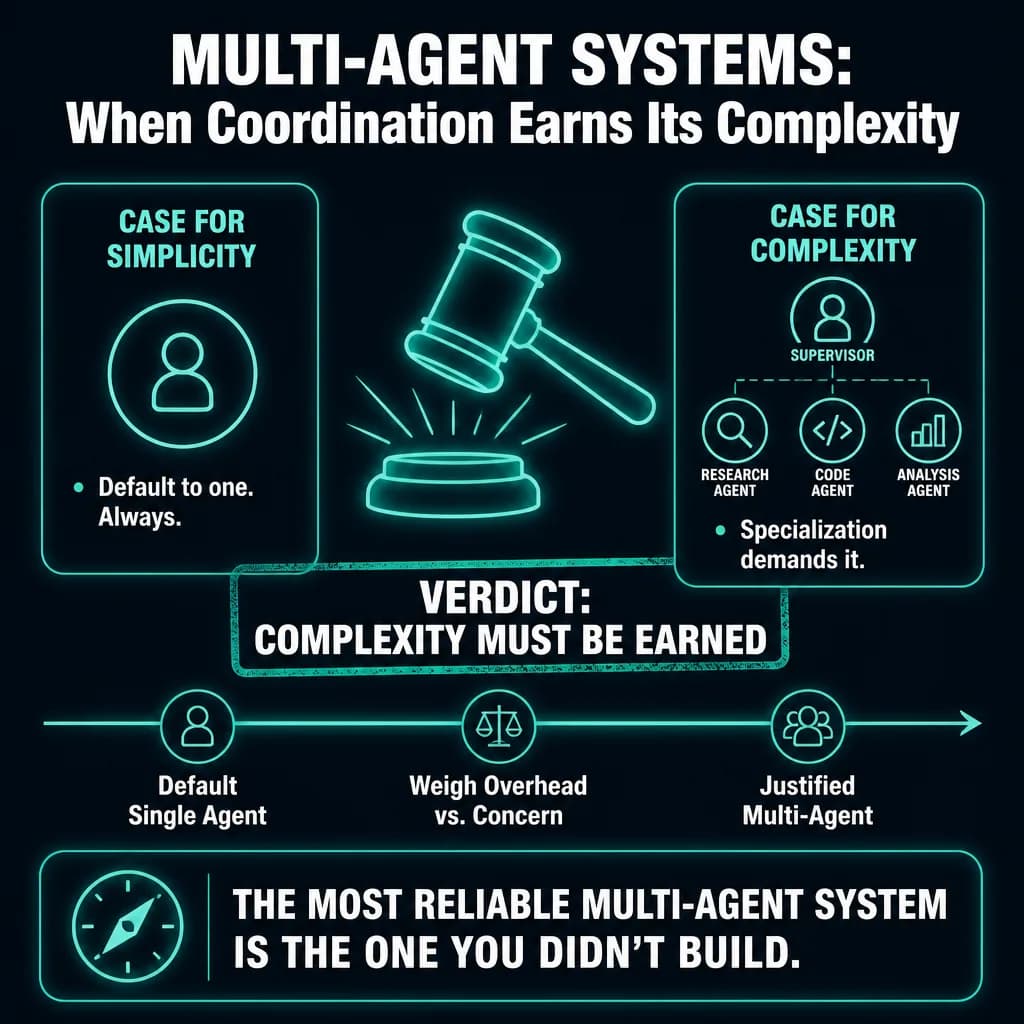
Multi-agent systems are appealing, the idea of multiple agents coordinating to accomplish a task sounding powerful, and this appeal leads teams to build multi-agent systems for tasks that do not need them. A multi-agent system adds the coordination complexity, the reliability problems of multiple agents where each agent’s reliability multiplies into the system’s, the governance problems of coordinating agents, and the communication problems of agents coordinating, and this complexity is a cost that a single agent or a simpler design does not have. Building a task as a multi-agent system takes on this complexity, which is only worth it when the task genuinely needs the multiple agents, and most tasks do not.
Most tasks that get built as multi-agent systems would be better as a single agent or a deterministic workflow with a single agent, because the task does not genuinely require multiple coordinating agents, and the multi-agent design adds the coordination complexity for a benefit the task did not need. A task that could be a single agent, or a deterministic workflow with one agent at the point that needs it, built as a multi-agent system pays the coordination complexity for nothing, because the multiple agents were not needed. This is the over-engineering that builds more complexity than the task needs, applied to multi-agent systems, where the multi-agent design is the complexity the task did not need. Multi-agent is usually the wrong choice because most tasks do not genuinely need multiple coordinating agents, and building them as multi-agent systems takes on the coordination complexity for a benefit the task did not need, which is why multi-agent has to earn its complexity.
When coordination earns its complexity
Coordination earns its complexity when the task genuinely requires multiple agents, which is when the task has parts that genuinely need to be handled by separate agents coordinating, rather than parts that a single agent or a simpler design could handle. A task genuinely needs multiple agents when it involves genuinely separate concerns that benefit from separate agents, or genuinely requires the coordination that only multiple agents provide, and for such a task the coordination complexity is worth it because the multiple agents are genuinely needed. The coordination earns its complexity when the task genuinely requires it, which is the condition that justifies taking on the coordination complexity.
Determining when the task genuinely needs multiple agents is the judgment, and it requires assessing whether the task actually requires the multiple agents or whether a single agent or simpler design would handle it. Most tasks, assessed honestly, do not genuinely need multiple agents, and can be handled by a single agent or a deterministic workflow with a single agent at the point that needs it, so the assessment usually finds that the multi-agent design is not needed. When the task does genuinely need multiple agents, the coordination earns its complexity, and the multi-agent system is the right choice, built with the governance of the coordination through a supervisor and the handling of the coordination’s reliability and communication problems. Coordination earns its complexity when the task genuinely requires multiple agents, which is the condition that justifies the multi-agent design, and most tasks do not meet it, which is why multi-agent is usually the wrong choice and the assessment of genuine need is what determines when it is right.
The trade-off, and the discipline of not going multi-agent
The multi-agent design trades simplicity for the coordination it provides, and naming that trade-off keeps the choice deliberate. A single agent or simpler design is simpler and more reliable, and a multi-agent system provides the coordination of multiple agents at the cost of the coordination complexity, so building a task as a multi-agent system trades the simplicity and reliability of a simpler design for the coordination, which is only worth it when the task genuinely needs the coordination. For most tasks, the simplicity of a simpler design is worth more than the coordination a multi-agent system would provide, because the task does not need the coordination, so the simpler design is the better choice.
The discipline is not going multi-agent unless the task genuinely needs it, resisting the appeal of the multi-agent design for tasks a simpler design would handle. This is the subtractive discipline applied to the multi-agent choice, where the strongest choice is often the simpler design that avoids the coordination complexity the task did not need, and the multi-agent design is reserved for the tasks that genuinely require it. The deeper point is that coordination earns its complexity only when the task genuinely needs multiple agents, and the discipline of not going multi-agent unless the task genuinely needs it is what keeps the coordination complexity where it is earned, avoiding the multi-agent design for the tasks a simpler design would handle. Not going multi-agent unless the task genuinely needs it, reserving the coordination complexity for the tasks that earn it, is the discipline that keeps multi-agent systems where they are needed rather than defaulting to them.

Where it almost broke
We saw a task built as a multi-agent system, multiple agents coordinating to accomplish it, on the appeal of the multi-agent design, and the coordination complexity was hurting the system without a corresponding benefit, because the task did not genuinely need the multiple agents. The system had the reliability problems of multiple agents multiplying into its reliability, the coordination complexity of the agents communicating, and the governance complexity of coordinating agents, and none of this was earning its cost, because the task could have been handled by a simpler design that did not need the multiple agents. The multi-agent design had been chosen for its appeal rather than the task’s genuine need, and it was paying the coordination complexity for nothing.
The correction assessed the task’s genuine need and simplified. We assessed whether the task genuinely required multiple agents, which it did not, and rebuilt it as a simpler design, a deterministic workflow with a single agent at the point that needed it, which avoided the coordination complexity the multi-agent design had taken on. The system became simpler and more reliable, because the coordination complexity that had not been earning its cost was removed, and the task was handled by the simpler design it had needed all along. The lesson was that multi-agent systems earn their complexity only when the task genuinely needs multiple agents, and most tasks do not, so the discipline of not going multi-agent unless the task genuinely needs it is what keeps the coordination complexity where it is earned.
Reserve coordination for the tasks that earn it
The reframe that keeps multi-agent systems where they belong is reserving the coordination complexity for the tasks that genuinely need multiple agents rather than defaulting to the multi-agent design for its appeal. Multi-agent systems earn their complexity only when coordination is genuinely required, and most tasks that get built as multi-agent systems would be better as a single agent or a simpler design, taking on the coordination complexity for a benefit the task did not need. The coordination has to earn its complexity, and most tasks do not need it.
The teams that build multi-agent systems well are the ones that assessed whether the task genuinely needed multiple agents, reserved the multi-agent design for the tasks that genuinely required the coordination, and built the simpler tasks as single agents or simpler designs. The appeal of the multi-agent design leads to building it for tasks a simpler design would handle, taking on the coordination complexity for nothing, and the discipline is not going multi-agent unless the task genuinely needs it. Reserving coordination for the tasks that earn it, and building everything else simpler, is what keeps multi-agent systems where they are needed, which is the discipline that beats the appeal of coordinating agents for tasks that do not need coordinating.
Related: Agentic AI
Tell us the number you need to move.
…outcomes that survive scrutiny.